


Logistics Optimised. Security Assured. Growth Enabled.

Delivering high-trust, future-ready software solutions to grow with your business.

OUR PARTNERS

[vc_raw_html]JTNDc3R5bGUlM0UlMEElMkYlMkEtLS1IRVJPJTIwU0VDVElPTi0tLSUyQSUyRiUwQS5oZXJvLXNlY3Rpb24lMjAucGFydG5lci1sb2dvJTIwaW1nJTdCJTBBJTIwJTIwJTIwJTIwZGlzcGxheSUzQWJsb2NrJTNCJTBBJTdEJTBBJTQwbWVkaWElMjhtYXgtd2lkdGglM0E3NjdweCUyOSU3QiUwQSUyMCUyMCUyMCUyMC5oZXJvLXNlY3Rpb24lMjAucGFydG5lci1sb2dvJTIwJTdCJTBBJTIwJTIwJTIwJTIwJTIwJTIwJTIwJTIwZGlzcGxheSUzQSUyMGZsZXglM0IlMEElMjAlMjAlMjAlMjAlMjAlMjAlMjAlMjBvdmVyZmxvdy14JTNBJTIwYXV0byUzQiUwQSUyMCUyMCUyMCUyMCUyMCUyMCUyMCUyMHNjcm9sbC1zbmFwLXR5cGUlM0ElMjB4JTIwbWFuZGF0b3J5JTNCJTBBJTIwJTIwJTIwJTIwJTIwJTIwJTIwJTIwLXdlYmtpdC1vdmVyZmxvdy1zY3JvbGxpbmclM0ElMjB0b3VjaCUzQiUwQSUyMCUyMCUyMCUyMCUyMCUyMCUyMCUyMHNjcm9sbC1wYWRkaW5nJTNBJTIwMCUzQiUwQSUyMCUyMCUyMCUyMCUyMCUyMCUyMCUyMG1hcmdpbiUzQSUyMDBweCUyMC0yMHB4JTIwJTIxaW1wb3J0YW50JTNCJTBBJTIwJTIwJTIwJTIwJTIwJTIwJTIwJTIwanVzdGlmeS1jb250ZW50JTNBbm9ybWFsJTNCJTBBJTIwJTIwJTIwJTIwJTIwJTIwJTIwJTIwc2Nyb2xsYmFyLXdpZHRoJTNBJTIwbm9uZSUzQiUwQSUyMCUyMCUyMCUyMCUyMCUyMCUyMCUyMC1tcy1vdmVyZmxvdy1zdHlsZSUzQSUyMG5vbmUlM0IlMEElMjAlMjAlMjAlMjAlN0QlMEElMjAlMjAlMjAlMjAuaGVyby1zZWN0aW9uJTIwLnBhcnRuZXItbG9nbyUzQSUzQS13ZWJraXQtc2Nyb2xsYmFyJTIwJTdCJTBBJTIwJTIwJTIwJTIwJTIwJTIwJTIwJTIwZGlzcGxheSUzQSUyMG5vbmUlM0IlMEElMjAlMjAlMjAlMjAlN0QlMEElMjAlMjAlMjAlMjAuaGVyby1zZWN0aW9uJTIwLnBhcnRuZXItbG9nbyUzRS53LWltYWdlJTIwJTdCJTBBJTIwJTIwJTIwJTIwJTIwJTIwJTIwJTIwZmxleCUzQSUyMDAlMjAwJTIwY2FsYyUyODEwMCUyNSUyMCUyRiUyMDMlMjklM0IlMEElMjAlMjAlMjAlMjAlMjAlMjAlMjAlMjBzY3JvbGwtc25hcC1hbGlnbiUzQSUyMHN0YXJ0JTNCJTBBJTIwJTIwJTIwJTIwJTIwJTIwJTIwJTIwZGlzcGxheSUzQSUyMGZsZXglM0IlMEElMjAlMjAlMjAlMjAlMjAlMjAlMjAlMjBhbGlnbi1pdGVtcyUzQSUyMGNlbnRlciUzQiUwQSUyMCUyMCUyMCUyMCUyMCUyMCUyMCUyMG1hcmdpbiUzQSUyMDBweCUzQiUwQSUyMCUyMCUyMCUyMCUyMCUyMCUyMCUyMHBhZGRpbmclM0ElMjAwcHglMjAxMHB4JTNCJTBBJTIwJTIwJTIwJTIwJTIwJTIwJTIwJTIwbWF4LWhlaWdodCUzQSUyMDE4cHglM0IlMEElMjAlMjAlMjAlMjAlN0QlMEElN0QlMEElM0MlMkZzdHlsZSUzRQ==[/vc_raw_html]

Secure, scalable, and high-performing logistics solutions. At Mitrais, we develop software that meets the demands of transport and maximises efficiency, visibility, and growth in supply chains.​

Custom Software Solutions for the Logistics Industry

Improve clinical care with rapid deployment of secure, AI-powered healthcare technology. Leverage scalable telehealth platforms and ISO 27001:2022-certified security for data protection. Seamless interoperability bridges legacy and modern systems, while ongoing support ensures efficient, future-ready solutions for the healthcare industry.

Cybersecurity First

We safeguard your systems against cyber threats with the support of Trend Micro & Palo Alto.​

Flexible Service Models

Choose from offshore, nearshore, or onshore delivery to suit your needs and budget.​

Risk-Free Trial

Try a dedicated developer for one month—only pay if your 100% satisfied.​

Industry-Proven Expertise:

Custom-built solutions for route optimisation, real-time tracking, and seamless system integrations.​

Built for Mid-Sized Australian Businesses

Efficient, high quality, cost-effectiveness enterprise-grade solutions.​

Your Challenges, Our Solutions

[vc_raw_html]JTNDc3R5bGUlM0UlMEEuY3liZXJzZWN1cml0eS1zZXJ2aWNlcy1zZWN0aW9uJTIwLmwtc2VjdGlvbi1pbWclN0IlMEElMjAlMjAlMjAlMjBiYWNrZ3JvdW5kLXBvc2l0aW9uJTNBJTIwbGVmdCUyMGJvdHRvbSUyMWltcG9ydGFudCUzQiUwQSUyMCUyMCUyMCUyMGJhY2tncm91bmQtc2l6ZSUzQSUyMDQ1MHB4JTIxaW1wb3J0YW50JTNCJTBBJTdEJTBBLmN5YmVyc2VjdXJpdHktc2VydmljZXMtc2VjdGlvbiUyMC53LXRhYnMlM0Uudy10YWJzLWxpc3QlMjAlN0IlMEElMjAlMjAlMjAlMjB3aWR0aCUzQSUyMDM1JTI1JTIxaW1wb3J0YW50JTNCJTBBJTdEJTBBLmN5YmVyc2VjdXJpdHktc2VydmljZXMtc2VjdGlvbiUyMC53LXRhYnMtc2VjdGlvbiU3QiUwQSUyMCUyMCUyMCUyMHBhZGRpbmctbGVmdCUzQTRyZW0lMjFpbXBvcnRhbnQlM0IlMEElN0QlMEEuY3liZXJzZWN1cml0eS1zZXJ2aWNlcy1zZWN0aW9uJTIwLnctdGFicy1saXN0JTIwLnctdGFicy1pdGVtJTNBbm90JTI4JTNBbGFzdC1jaGlsZCUyOSU3QiUwQSUyMCUyMCUyMCUyMG1hcmdpbi1ib3R0b20lM0ExMHB4JTIxaW1wb3J0YW50JTNCJTBBJTdEJTBBLmN5YmVyc2VjdXJpdHktc2VydmljZXMtc2VjdGlvbiUyMC53LXRhYnMtbGlzdCUyMC53LXRhYnMtaXRlbSU3QiUwQSUyMCUyMCUyMCUyMHBhZGRpbmclM0ElMjAyMHB4JTIwMjBweCUyMCUyMWltcG9ydGFudCUzQiUwQSUyMCUyMCUyMCUyMHBhZGRpbmctcmlnaHQlM0ElMjA1NXB4JTIwJTIxaW1wb3J0YW50JTNCJTBBJTIwJTIwJTIwJTIwYm9yZGVyLXJhZGl1cyUzQSUyMDE2cHglMjAlMjFpbXBvcnRhbnQlM0IlMEElMjAlMjAlMjAlMjBwb3NpdGlvbiUzQSUyMHJlbGF0aXZlJTNCJTBBJTIwJTIwJTIwJTIwdHJhbnNpdGlvbiUzQSUyMDAuM3MlM0IlMEElN0QlMEEuY3liZXJzZWN1cml0eS1zZXJ2aWNlcy1zZWN0aW9uJTIwLnctdGFicy1saXN0JTIwLnctdGFicy1pdGVtLmFjdGl2ZSU3QiUwQSUyMCUyMCUyMCUyMGZvbnQtd2VpZ2h0JTNBYm9sZCUzQiUwQSU3RCUwQS5jeWJlcnNlY3VyaXR5LXNlcnZpY2VzLXNlY3Rpb24lMjAudy10YWJzLWxpc3QlMjAudy10YWJzLWl0ZW0lM0Fub3QlMjguYWN0aXZlJTI5JTNBaG92ZXIlN0IlMEElMjAlMjAlMjAlMjBiYWNrZ3JvdW5kLWNvbG9yJTNBcmdiYSUyODI1NSUyQzI1NSUyQzI1NSUyQzAuMiUyOSUyMWltcG9ydGFudCUzQiUwQSUyMCUyMCUyMCUyMGNvbG9yJTNBJTIwJTIzZmZmZmZmJTIxaW1wb3J0YW50JTNCJTBBJTdEJTBBLmN5YmVyc2VjdXJpdHktc2VydmljZXMtc2VjdGlvbiUyMC53LXRhYnMtaXRlbSUyMGklMjAlN0IlMEElMjAlMjAlMjAlMjBiYWNrZ3JvdW5kLWNvbG9yJTNBJTIwJTIzZmZmZmZmJTNCJTBBJTIwJTIwJTIwJTIwY29sb3IlM0ElMjB2YXIlMjgtLWNvbG9yLWFsdC1jb250ZW50LXRleHQlMjklM0IlMEElMjAlMjAlMjAlMjBoZWlnaHQlM0ElMjAyNnB4JTNCJTBBJTIwJTIwJTIwJTIwd2lkdGglM0ElMjAyNnB4JTNCJTBBJTIwJTIwJTIwJTIwbGluZS1oZWlnaHQlM0ElMjAyNnB4JTNCJTBBJTIwJTIwJTIwJTIwdGV4dC1hbGlnbiUzQSUyMGNlbnRlciUzQiUwQSUyMCUyMCUyMCUyMGJvcmRlci1yYWRpdXMlM0ElMjA1MCUyNSUzQiUwQSUyMCUyMCUyMCUyMHBvc2l0aW9uJTNBJTIwYWJzb2x1dGUlM0IlMEElMjAlMjAlMjAlMjByaWdodCUzQSUyMDIwcHglM0IlMEElMjAlMjAlMjAlMjBmb250LXNpemUlM0ElMjAxNXB4JTNCJTBBJTIwJTIwJTIwJTIwdHJhbnNpdGlvbiUzQTAuMnMlM0IlMEElMjAlMjAlMjAlMjB0b3AlM0ElMjA1MCUyNSUzQiUwQSUyMCUyMCUyMCUyMHRyYW5zZm9ybSUzQSUyMHRyYW5zbGF0ZVklMjgtNTAlMjUlMjklM0IlMEElN0QlMEEuY3liZXJzZWN1cml0eS1zZXJ2aWNlcy1zZWN0aW9uJTIwLnctdGFicy1pdGVtLmFjdGl2ZSUyMGklN0IlMEElMjAlMjAlMjAlMjBjb2xvciUzQSUyMCUyM2ZmZmZmZiUzQiUwQSUyMCUyMCUyMCUyMGJhY2tncm91bmQtY29sb3IlM0ElMjB2YXIlMjgtLWNvbG9yLWFsdC1jb250ZW50LXRleHQlMjklM0IlMEElN0QlMEEuY3liZXJzZWN1cml0eS1zZXJ2aWNlcy1zZWN0aW9uJTIwLnctdGFicy1zZWN0aW9uLWNvbnRlbnQtaCUyMC53cGJfdGV4dF9jb2x1bW4lN0IlMEElMjAlMjAlMjAlMjB0cmFuc2l0aW9uJTNBMC4zcyUzQiUwQSUyMCUyMCUyMCUyMGJvcmRlciUzQXVuc2V0JTIxaW1wb3J0YW50JTNCJTBBJTdEJTBBLmN5YmVyc2VjdXJpdHktc2VydmljZXMtc2VjdGlvbiUyMC53LXRhYnMtc2VjdGlvbi1jb250ZW50LWglMjAud3BiX3RleHRfY29sdW1uJTNBaG92ZXIlN0IlMEElMjAlMjAlMjAlMjB0cmFuc2l0aW9uJTNBMC4zcyUzQiUwQSUyMCUyMCUyMCUyMGJveC1zaGFkb3clM0ElMjAwcHglMjAwcHglMjAwcHglMjAycHglMjByZ2JhJTI4MTk2JTJDJTIwMTk2JTJDJTIwMTk2JTJDJTIwMC41MCUyOSUyMCUyMWltcG9ydGFudCUzQiUwQSUyMCUyMCUyMCUyMGJhY2tncm91bmQtY29sb3IlM0FyZ2JhJTI4MjU1JTJDMjU1JTJDMjU1JTJDMC4wNSUyOSUzQiUwQSU3RCUwQS5jeWJlcnNlY3VyaXR5LXNlcnZpY2VzLXNlY3Rpb24lMjAudy10YWJzLXNlY3Rpb24tY29udGVudC1oJTIwLndwYl90ZXh0X2NvbHVtbiUyMGIlMkMlMEEuY3liZXJzZWN1cml0eS1zZXJ2aWNlcy1zZWN0aW9uJTIwLnctdGFicy1zZWN0aW9uLWNvbnRlbnQtaCUyMC53cGJfdGV4dF9jb2x1bW4lMjBzdHJvbmclN0IlMEElMjAlMjAlMjAlMjBmb250LXdlaWdodCUzQTcwMCUzQiUwQSU3RCUwQS5jeWJlcnNlY3VyaXR5LXNlcnZpY2VzLXNlY3Rpb24lMjAudy10YWJzLWxpc3QlMjAudy10YWJzLWl0ZW0lMjAlM0UlMjBzcGFuJTdCJTBBJTIwJTIwJTIwJTIwbWF4LXdpZHRoJTNBJTIwMjMwcHglM0IlMEElMjAlMjAlMjAlMjBkaXNwbGF5JTNBJTIwYmxvY2slM0IlMEElN0QlMEElMEElNDBtZWRpYSUyOG1heC13aWR0aCUzQTEwMjRweCUyOSU3QiUwQSUyMCUyMCUyMCUyMC5jeWJlcnNlY3VyaXR5LXNlcnZpY2VzLXNlY3Rpb24lMjAudy10YWJzLXNlY3Rpb24lMjAlN0IlMEElMjAlMjAlMjAlMjAlMjAlMjAlMjAlMjBwYWRkaW5nLWxlZnQlM0ElMjAycmVtJTIwJTIxaW1wb3J0YW50JTNCJTBBJTIwJTIwJTIwJTIwJTdEJTBBJTIwJTIwJTIwJTIwLmN5YmVyc2VjdXJpdHktc2VydmljZXMtc2VjdGlvbiUyMC53LXRhYnMtbGlzdCUyMC53LXRhYnMtaXRlbSUyMCU3QiUwQSUyMCUyMCUyMCUyMCUyMCUyMCUyMCUyMHBhZGRpbmclM0ElMjAyMHB4JTIwMThweCUyMCUyMWltcG9ydGFudCUzQiUwQSUyMCUyMCUyMCUyMCU3RCUwQSU3RCUwQSUwQSU0MG1lZGlhJTI4bWF4LXdpZHRoJTNBNzY3cHglMjklN0IlMEElMjAlMjAlMjAlMjAuY3liZXJzZWN1cml0eS1zZXJ2aWNlcy1zZWN0aW9uJTIwLnctdGFicyU3QiUwQSUyMCUyMCUyMCUyMCUyMCUyMCUyMCUyMGZsZXgtZGlyZWN0aW9uJTNBY29sdW1uJTIxaW1wb3J0YW50JTNCJTBBJTIwJTIwJTIwJTIwJTdEJTBBJTIwJTIwJTIwJTIwLmN5YmVyc2VjdXJpdHktc2VydmljZXMtc2VjdGlvbiUyMC53LXRhYnMlMjAlM0Uudy10YWJzLWxpc3QlMjAlN0IlMEElMjAlMjAlMjAlMjAlMjAlMjAlMjAlMjB3aWR0aCUzQSUyMDEwMCUyNSUyMWltcG9ydGFudCUzQiUwQSUyMCUyMCUyMCUyMCUyMCUyMCUyMCUyMG1hcmdpbi1ib3R0b20lM0ElMjA0MHB4JTNCJTBBJTIwJTIwJTIwJTIwJTdEJTBBJTIwJTIwJTIwJTIwJTBBJTIwJTIwJTIwJTIwLmN5YmVyc2VjdXJpdHktc2VydmljZXMtc2VjdGlvbiUyMC53LXRhYnMtbGlzdCUyMC53LXRhYnMtaXRlbSUyMCU3QiUwQSUyMCUyMCUyMCUyMCUyMCUyMCUyMCUyMHBhZGRpbmclM0ElMjAxNnB4JTIwMTZweCUyMCUyMWltcG9ydGFudCUzQiUwQSUyMCUyMCUyMCUyMCUyMCUyMCUyMCUyMHBhZGRpbmctcmlnaHQlM0ElMjA0NXB4JTIwJTIxaW1wb3J0YW50JTNCJTBBJTIwJTIwJTIwJTIwJTdEJTBBJTIwJTIwJTIwJTIwLmN5YmVyc2VjdXJpdHktc2VydmljZXMtc2VjdGlvbiUyMC53LXRhYnMtaXRlbSUyMGklMjAlN0IlMEElMjAlMjAlMjAlMjAlMjAlMjAlMjAlMjByaWdodCUzQSUyMDEycHglM0IlMEElMjAlMjAlMjAlMjAlN0QlMEElMjAlMjAlMjAlMjAuY3liZXJzZWN1cml0eS1zZXJ2aWNlcy1zZWN0aW9uJTIwLnctdGFicy1zZWN0aW9uJTIwJTdCJTBBJTIwJTIwJTIwJTIwJTIwJTIwJTIwJTIwcGFkZGluZy1sZWZ0JTNBJTIwMHJlbSUyMCUyMWltcG9ydGFudCUzQiUwQSUyMCUyMCUyMCUyMCU3RCUwQSUyMCUyMCUyMCUyMC5jeWJlcnNlY3VyaXR5LXNlcnZpY2VzLXNlY3Rpb24lMjAudy10YWJzJTIwJTNFLnctdGFicy1zZWN0aW9ucyU3QiUwQSUyMCUyMCUyMCUyMCUyMCUyMCUyMCUyMHdpZHRoJTNBJTIwMTAwJTI1JTIxaW1wb3J0YW50JTNCJTBBJTIwJTIwJTIwJTIwJTdEJTBBJTdEJTBBJTNDJTJGc3R5bGUlM0U=[/vc_raw_html]

Speak with an Expert

Book a complimentary consultation with an experienced Australian-based specialist. Schedule a meeting today.

THE ULTIMATE CHECKLIST

23 Questions You Need to Ask to Find the Right Software Development Partner

After two decades of working with hundreds of Australian companies, our Consultants—Rob Mills, Jeff Graham, Mike Page, and Thomas Rizal Trika—have compiled a list of commonly asked questions from companies seeking the right partner for software development. Our 2-minute interactive form will guide you through the answers to all your questions.

[vc_raw_html]JTNDc3R5bGUlM0UlMEElNDBtZWRpYSUyOG1heC13aWR0aCUzQTc2N3B4JTI5JTdCJTBBJTIwJTIwJTIwJTIwLnZpZGVvLXNlY3Rpb24lMjAubGluay13aXRoLWFycm93JTdCJTBBJTIwJTIwJTIwJTIwJTIwJTIwJTIwJTIwanVzdGlmeS1jb250ZW50JTNBY2VudGVyJTNCJTBBJTIwJTIwJTIwJTIwJTdEJTBBJTdEJTBBJTNDJTJGc3R5bGUlM0U=[/vc_raw_html]
TESTIMONIALS

Trusted by

We’ve helped clients launch successful products and break into new markets – yours could be next.

[vc_raw_html]JTNDc3R5bGUlM0UlMEEudGVzdGltb25pYWxzLWljb24lMjBpbWclN0IlMEElMjAlMjAlMjAlMjBvYmplY3QtZml0JTNBJTIwdW5zZXQlM0IlMEElMjAlMjAlMjAlMjBtYXgtaGVpZ2h0JTNBJTIwMzBweCUzQiUwQSUyMCUyMCUyMCUyMHdpZHRoJTNBJTIwYXV0byUzQiUwQSU3RCUwQS50ZXN0aW1vbmlhbHMtc2VjdGlvbiUyMC5vd2wtY2Fyb3VzZWwlMjAub3dsLWRvdHMlN0IlMEElMjAlMjAlMjAlMjB0ZXh0LWFsaWduJTNBJTIwbGVmdCUzQiUwQSUyMCUyMCUyMCUyMHBhZGRpbmctbGVmdCUzQSUyMDM4cHglM0IlMEElN0QlMEEudGVzdGltb25pYWxzLXNlY3Rpb24lMjAub3dsLWNhcm91c2VsJTIwLm93bC1uYXYlN0IlMEElMjAlMjAlMjAlMjBwb3NpdGlvbiUzQSUyMGFic29sdXRlJTNCJTBBJTIwJTIwJTIwJTIwYm90dG9tJTNBJTIwLTFweCUzQiUwQSUyMCUyMCUyMCUyMHdpZHRoJTNBJTIwMTAwJTI1JTIwJTIxaW1wb3J0YW50JTNCJTBBJTIwJTIwJTIwJTIwbWF4LXdpZHRoJTNBJTIwMTM1cHglM0IlMEElMjAlMjAlMjAlMjBoZWlnaHQlM0ElMjAyMnB4JTNCJTBBJTIwJTIwJTIwJTIwbGVmdCUzQSUyMHZhciUyOC0tZ2FwJTI5JTNCJTBBJTdEJTBBLnRlc3RpbW9uaWFscy1zZWN0aW9uJTIwLm93bC1jYXJvdXNlbCUyMC5vd2wtbmF2JTIwYnV0dG9uJTIwJTdCJTBBJTIwJTIwJTIwJTIwdG9wJTNBJTIwMCUzQiUwQSUyMCUyMCUyMCUyMHRyYW5zZm9ybSUzQSUyMHVuc2V0JTNCJTBBJTIwJTIwJTIwJTIwbWFyZ2luLXRvcCUzQSUyMDBweCUzQiUwQSUyMCUyMCUyMCUyMG1hcmdpbi1sZWZ0JTNBJTIwMCUzQiUwQSUyMCUyMCUyMCUyMG1hcmdpbi1yaWdodCUzQSUyMDAlM0IlMEElMjAlMjAlMjAlMjBmb250LXNpemUlM0ElMjAxMXB4JTIxaW1wb3J0YW50JTNCJTBBJTIwJTIwJTIwJTIwYm9yZGVyJTNBJTIwc29saWQlMjAycHglMjB2YXIlMjgtLWNvbG9yLWNvbnRlbnQtbGluay1ob3ZlciUyOSUyMWltcG9ydGFudCUzQiUwQSUyMCUyMCUyMCUyMGhlaWdodCUzQSUyMDIycHglM0IlMEElMjAlMjAlMjAlMjB3aWR0aCUzQSUyMDIycHglM0IlMEElMjAlMjAlMjAlMjB0ZXh0LWFsaWduJTNBJTIwY2VudGVyJTNCJTBBJTIwJTIwJTIwJTIwYm9yZGVyLXJhZGl1cyUzQSUyMDEwMCUyNSUzQiUwQSUyMCUyMCUyMCUyMGp1c3RpZnktY29udGVudCUzQSUyMGNlbnRlciUzQiUwQSUyMCUyMCUyMCUyMGFsaWduLWl0ZW1zJTNBJTIwY2VudGVyJTNCJTBBJTdEJTBBLnRlc3RpbW9uaWFscy1zZWN0aW9uJTIwLm93bC1jYXJvdXNlbCUyMC5vd2wtbmF2JTIwLmRpc2FibGVkJTdCJTBBJTIwJTIwJTIwJTIwZGlzcGxheSUzQWZsZXglM0IlMEElMjAlMjAlMjAlMjBvcGFjaXR5JTNBMC41JTNCJTBBJTdEJTBBLnRlc3RpbW9uaWFscy1zZWN0aW9uJTIwLm93bC1jYXJvdXNlbCUyMC5vd2wtbmF2JTIwLm93bC1uZXh0JTNBYWZ0ZXIlMjAlN0IlMEElMjAlMjAlMjAlMjBjb250ZW50JTNBJTIwJTI3JTVDZjA2MSUyNyUzQiUwQSUyMCUyMCUyMCUyMGZvbnQtd2VpZ2h0JTNBJTIwNzAwJTNCJTBBJTIwJTIwJTIwJTIwcGFkZGluZyUzQSUyMDBweCUyMCUyMWltcG9ydGFudCUzQiUwQSU3RCUwQS50ZXN0aW1vbmlhbHMtc2VjdGlvbiUyMC5vd2wtY2Fyb3VzZWwlMjAub3dsLW5hdiUyMC5vd2wtcHJldiUzQWFmdGVyJTIwJTdCJTBBJTIwJTIwJTIwJTIwY29udGVudCUzQSUyMCUyNyU1Q2YwNjAlMjclM0IlMEElMjAlMjAlMjAlMjBmb250LXdlaWdodCUzQSUyMDcwMCUzQiUwQSUyMCUyMCUyMCUyMHBhZGRpbmclM0ElMjAwcHglMjAlMjFpbXBvcnRhbnQlM0IlMEElN0QlMEEudGVzdGltb25pYWxzLXNlY3Rpb24lMjAub3dsLWNhcm91c2VsJTIwLm93bC1kb3QuYWN0aXZlJTIwc3BhbiUyMCU3QiUwQSUyMCUyMCUyMCUyMGJhY2tncm91bmQlM0ElMjB2YXIlMjgtLWNvbG9yLWNvbnRlbnQtcHJpbWFyeSUyOSUyMCUyMWltcG9ydGFudCUzQiUwQSUyMCUyMCUyMCUyMGJveC1zaGFkb3clM0ElMjB1bnNldCUzQiUwQSU3RCUwQS50ZXN0aW1vbmlhbHMtc2VjdGlvbiUyMC5vd2wtY2Fyb3VzZWwlMjAub3dsLWRvdCUyMHNwYW4lMjAlN0IlMEElMjAlMjAlMjAlMjBtYXJnaW4lM0ElMjA2cHglMjA0cHglM0IlMEElN0QlMEEudGVzdGltb25pYWxzLXNlY3Rpb24lMjAudy1ncmlkLWl0ZW0taCU3QiUwQSUyMCUyMCUyMCUyMGJvcmRlciUzQSUyMHNvbGlkJTIwMXB4JTIwJTIzRTJFMUU1JTNCJTBBJTIwJTIwJTIwJTIwYm9yZGVyLXJhZGl1cyUzQSUyMDE2cHglM0IlMEElMjAlMjAlMjAlMjBvdmVyZmxvdyUzQSUyMGhpZGRlbiUzQiUwQSUyMCUyMCUyMCUyMHBhZGRpbmclM0ElMjAyMHB4JTNCJTBBJTdEJTBBLnRlc3RpbW9uaWFscy1zZWN0aW9uJTIwLnctZ3JpZC1pdGVtJTdCJTBBJTIwJTIwJTIwJTIwaGVpZ2h0JTNBMTAwJTI1JTNCJTBBJTdEJTBBLmxpbmstd2l0aC1hcnJvdy0tcmlnaHQlMjAudy1pY29uYm94LWljb24lN0IlMEElMjAlMjAlMjAlMjBkaXNwbGF5JTNBYmxvY2slM0IlMEElN0QlMEEubGluay13aXRoLWFycm93LS1yaWdodCUyMC53LWljb25ib3gtbGluayU3QiUwQSUyMCUyMCUyMCUyMHRyYW5zaXRpb24lM0EwLjNzJTNCJTBBJTdEJTBBLmxpbmstd2l0aC1hcnJvdy0tcmlnaHQlM0FoYXMlMjhhJTNBaG92ZXIlMjklMjBhJTdCJTBBJTIwJTIwJTIwJTIwY29sb3IlM0ElMjBpbmhlcml0JTNCJTBBJTdEJTBBLmxpbmstd2l0aC1hcnJvdy0tcmlnaHQlM0FoYXMlMjhhJTNBaG92ZXIlMjklMjAudy1pY29uYm94LWxpbmslM0Fub3QlMjglM0FoYXMlMjgudy1pY29uYm94LWljb24lMjklMjklN0IlMEElMjAlMjAlMjAlMjB0cmFuc2Zvcm0lM0ElMjB0cmFuc2xhdGVYJTI4LThweCUyOSUzQiUwQSU3RCUwQSUwQSU0MG1lZGlhJTI4bWF4LXdpZHRoJTNBNzY3cHglMjklN0IlMEElMjAlMjAlMjAlMjAudGVzdGltb25pYWxzLXNlY3Rpb24lMjAub3dsLWNhcm91c2VsJTIwLm93bC1uYXYlMjAlN0IlMEElMjAlMjAlMjAlMjAlMjAlMjAlMjAlMjB3aWR0aCUzQSUyMHVuc2V0JTIwJTIxaW1wb3J0YW50JTNCJTBBJTIwJTIwJTIwJTIwJTIwJTIwJTIwJTIwbWF4LXdpZHRoJTNBJTIwdW5zZXQlM0IlMEElMjAlMjAlMjAlMjAlMjAlMjAlMjAlMjBsZWZ0JTNBJTIwdmFyJTI4LS1nYXAlMjklM0IlMEElMjAlMjAlMjAlMjAlMjAlMjAlMjAlMjByaWdodCUzQSUyMHZhciUyOC0tZ2FwJTI5JTNCJTBBJTIwJTIwJTIwJTIwJTdEJTBBJTIwJTIwJTIwJTIwLnRlc3RpbW9uaWFscy1zZWN0aW9uJTIwLm93bC1jYXJvdXNlbCUyMC5vd2wtZG90cyUyMCU3QiUwQSUyMCUyMCUyMCUyMCUyMCUyMCUyMCUyMHRleHQtYWxpZ24lM0ElMjBjZW50ZXIlM0IlMEElMjAlMjAlMjAlMjAlMjAlMjAlMjAlMjBwYWRkaW5nLWxlZnQlM0ElMjAzOHB4JTNCJTBBJTIwJTIwJTIwJTIwJTIwJTIwJTIwJTIwcGFkZGluZy1yaWdodCUzQSUyMDM4cHglM0IlMEElMjAlMjAlMjAlMjAlN0QlMEElN0QlMEElM0MlMkZzdHlsZSUzRQ==[/vc_raw_html]
CASE STUDIES

Client Success Stories – Real Results, Proven Impact

[vc_raw_html]JTNDc3R5bGUlM0UlMEEucG9zdC1zZWN0aW9uJTIwLm93bC1jYXJvdXNlbCUyMC5vd2wtZG90cyU3QiUwQSUyMCUyMCUyMCUyMHRleHQtYWxpZ24lM0ElMjBsZWZ0JTNCJTBBJTIwJTIwJTIwJTIwcGFkZGluZy1sZWZ0JTNBJTIwMzhweCUzQiUwQSU3RCUwQS5wb3N0LXNlY3Rpb24lMjAub3dsLWNhcm91c2VsJTIwLm93bC1uYXYlN0IlMEElMjAlMjAlMjAlMjBwb3NpdGlvbiUzQSUyMGFic29sdXRlJTNCJTBBJTIwJTIwJTIwJTIwYm90dG9tJTNBJTIwLTFweCUzQiUwQSUyMCUyMCUyMCUyMHdpZHRoJTNBJTIwMTAwJTI1JTIwJTIxaW1wb3J0YW50JTNCJTBBJTIwJTIwJTIwJTIwbWF4LXdpZHRoJTNBJTIwMTM1cHglM0IlMEElMjAlMjAlMjAlMjBoZWlnaHQlM0ElMjAyMnB4JTNCJTBBJTIwJTIwJTIwJTIwbGVmdCUzQSUyMHZhciUyOC0tZ2FwJTI5JTNCJTBBJTdEJTBBLnBvc3Qtc2VjdGlvbiUyMC5vd2wtY2Fyb3VzZWwlMjAub3dsLW5hdiUyMGJ1dHRvbiUyMCU3QiUwQSUyMCUyMCUyMCUyMHRvcCUzQSUyMDAlM0IlMEElMjAlMjAlMjAlMjB0cmFuc2Zvcm0lM0ElMjB1bnNldCUzQiUwQSUyMCUyMCUyMCUyMG1hcmdpbi10b3AlM0ElMjAwcHglM0IlMEElMjAlMjAlMjAlMjBtYXJnaW4tbGVmdCUzQSUyMDAlM0IlMEElMjAlMjAlMjAlMjBtYXJnaW4tcmlnaHQlM0ElMjAwJTNCJTBBJTIwJTIwJTIwJTIwZm9udC1zaXplJTNBJTIwMTFweCUyMWltcG9ydGFudCUzQiUwQSUyMCUyMCUyMCUyMGJvcmRlciUzQSUyMHNvbGlkJTIwMnB4JTIwdmFyJTI4LS1jb2xvci1jb250ZW50LWxpbmstaG92ZXIlMjklMjFpbXBvcnRhbnQlM0IlMEElMjAlMjAlMjAlMjBoZWlnaHQlM0ElMjAyMnB4JTNCJTBBJTIwJTIwJTIwJTIwd2lkdGglM0ElMjAyMnB4JTNCJTBBJTIwJTIwJTIwJTIwdGV4dC1hbGlnbiUzQSUyMGNlbnRlciUzQiUwQSUyMCUyMCUyMCUyMGJvcmRlci1yYWRpdXMlM0ElMjAxMDAlMjUlM0IlMEElMjAlMjAlMjAlMjBqdXN0aWZ5LWNvbnRlbnQlM0ElMjBjZW50ZXIlM0IlMEElMjAlMjAlMjAlMjBhbGlnbi1pdGVtcyUzQSUyMGNlbnRlciUzQiUwQSU3RCUwQS5wb3N0LXNlY3Rpb24lMjAub3dsLWNhcm91c2VsJTIwLm93bC1uYXYlMjAuZGlzYWJsZWQlN0IlMEElMjAlMjAlMjAlMjBkaXNwbGF5JTNBZmxleCUzQiUwQSUyMCUyMCUyMCUyMG9wYWNpdHklM0EwLjUlM0IlMEElN0QlMEEucG9zdC1zZWN0aW9uJTIwLm93bC1jYXJvdXNlbCUyMC5vd2wtbmF2JTIwLm93bC1uZXh0JTNBYWZ0ZXIlMjAlN0IlMEElMjAlMjAlMjAlMjBjb250ZW50JTNBJTIwJTI3JTVDZjA2MSUyNyUzQiUwQSUyMCUyMCUyMCUyMGZvbnQtd2VpZ2h0JTNBJTIwNzAwJTNCJTBBJTIwJTIwJTIwJTIwcGFkZGluZyUzQSUyMDBweCUyMCUyMWltcG9ydGFudCUzQiUwQSU3RCUwQS5wb3N0LXNlY3Rpb24lMjAub3dsLWNhcm91c2VsJTIwLm93bC1uYXYlMjAub3dsLXByZXYlM0FhZnRlciUyMCU3QiUwQSUyMCUyMCUyMCUyMGNvbnRlbnQlM0ElMjAlMjclNUNmMDYwJTI3JTNCJTBBJTIwJTIwJTIwJTIwZm9udC13ZWlnaHQlM0ElMjA3MDAlM0IlMEElMjAlMjAlMjAlMjBwYWRkaW5nJTNBJTIwMHB4JTIwJTIxaW1wb3J0YW50JTNCJTBBJTdEJTBBLnBvc3Qtc2VjdGlvbiUyMC5vd2wtY2Fyb3VzZWwlMjAub3dsLWRvdC5hY3RpdmUlMjBzcGFuJTIwJTdCJTBBJTIwJTIwJTIwJTIwYmFja2dyb3VuZCUzQSUyMHZhciUyOC0tY29sb3ItY29udGVudC1wcmltYXJ5JTI5JTIwJTIxaW1wb3J0YW50JTNCJTBBJTIwJTIwJTIwJTIwYm94LXNoYWRvdyUzQSUyMHVuc2V0JTNCJTBBJTdEJTBBLnBvc3Qtc2VjdGlvbiUyMC5vd2wtY2Fyb3VzZWwlMjAub3dsLWRvdCUyMHNwYW4lMjAlN0IlMEElMjAlMjAlMjAlMjBtYXJnaW4lM0ElMjA2cHglMjA0cHglM0IlMEElN0QlMEEucG9zdC1zZWN0aW9uJTIwLnctZ3JpZC1pdGVtLWglN0IlMEElMjAlMjAlMjAlMjBib3JkZXIlM0ElMjBzb2xpZCUyMDFweCUyMCUyM0UyRTFFNSUzQiUwQSUyMCUyMCUyMCUyMGJvcmRlci1yYWRpdXMlM0ElMjAxNnB4JTNCJTBBJTIwJTIwJTIwJTIwb3ZlcmZsb3clM0ElMjBoaWRkZW4lM0IlMEElMjAlMjAlMjAlMjBwYWRkaW5nJTNBJTIwMjBweCUzQiUwQSUyMCUyMCUyMCUyMHBhZGRpbmctYm90dG9tJTNBNDVweCUzQiUwQSU3RCUwQS5wb3N0LXNlY3Rpb24lMjAudy1ncmlkLWl0ZW0lN0IlMEElMjAlMjAlMjAlMjBoZWlnaHQlM0ExMDAlMjUlM0IlMEElN0QlMEEucG9zdC1zZWN0aW9uJTIwLnctZ3JpZC1pdGVtLWglMjAlM0UlMjAucG9zdF9pbWFnZSU3QiUwQSUyMCUyMCUyMCUyMG1hcmdpbiUzQSUyMC0yMHB4JTNCJTBBJTIwJTIwJTIwJTIwd2lkdGglM0ElMjBjYWxjJTI4MTAwJTI1JTIwJTJCJTIwNDBweCUyOSUzQiUwQSU3RCUwQS5wb3N0LXNlY3Rpb24lMjAudy1ncmlkLWl0ZW0taCUyMCUzRSUyMC53LWJ0biU3QiUwQSUyMCUyMCUyMCUyMHBvc2l0aW9uJTNBJTIwYWJzb2x1dGUlM0IlMEElMjAlMjAlMjAlMjBib3R0b20lM0ElMjAyMHB4JTNCJTBBJTIwJTIwJTIwJTIwZGlzcGxheSUzQSUyMGZsZXglM0IlMEElMjAlMjAlMjAlMjBhbGlnbi1pdGVtcyUzQSUyMGNlbnRlciUzQiUwQSU3RCUwQS5wb3N0LXNlY3Rpb24lMjAudy1ncmlkLWl0ZW0taCUyMCUzRSUyMC5wb3N0X3RheG9ub215JTIwJTNFJTIwc3BhbiUzQW5vdCUyOCUzQWxhc3QtY2hpbGQlMjklMjAlN0IlMEElMjAlMjAlMjAlMjBtYXJnaW4tcmlnaHQlM0ElMjAyMHB4JTNCJTBBJTIwJTIwJTIwJTIwbWFyZ2luLWJvdHRvbSUzQSUyMDJweCUzQiUwQSUyMCUyMCUyMCUyMGRpc3BsYXklM0ElMjBpbmxpbmUtYmxvY2slM0IlMEElN0QlMEEucG9zdC1zZWN0aW9uJTIwLnctZ3JpZC1pdGVtLWglMjAlM0UlMjAudy1idG4lMjBpJTdCJTBBJTIwJTIwJTIwJTIwZm9udC1zaXplJTNBJTIwOHB4JTNCJTBBJTIwJTIwJTIwJTIwZGlzcGxheSUzQSUyMGJsb2NrJTNCJTBBJTIwJTIwJTIwJTIwYmFja2dyb3VuZCUzQSUyMHZhciUyOC0tY29sb3ItY29udGVudC1saW5rLWhvdmVyJTI5JTIwJTIxaW1wb3J0YW50JTNCJTBBJTIwJTIwJTIwJTIwY29sb3IlM0ElMjB3aGl0ZSUzQiUwQSUyMCUyMCUyMCUyMGxpbmUtaGVpZ2h0JTNBJTIwMi41ZW0lM0IlMEElMjAlMjAlMjAlMjBoZWlnaHQlM0ElMjAyLjVlbSUzQiUwQSUyMCUyMCUyMCUyMHdpZHRoJTNBJTIwMi41ZW0lM0IlMEElMjAlMjAlMjAlMjB0ZXh0LWFsaWduJTNBJTIwY2VudGVyJTNCJTBBJTIwJTIwJTIwJTIwYm9yZGVyLXJhZGl1cyUzQSUyMDEwMCUyNSUzQiUwQSUyMCUyMCUyMCUyMG1hcmdpbi1sZWZ0JTNBJTIwY2FsYyUyODE1cHglMjAlMkIlMjAwLjJlbSUyOSUzQiUwQSUyMCUyMCUyMCUyMHRyYW5zaXRpb24lM0ElMjAwLjNzJTNCJTBBJTdEJTBBLnBvc3Qtc2VjdGlvbiUyMC53LWdyaWQtaXRlbS1oJTIwJTNFJTIwLnctYnRuJTNBaG92ZXIlMjBpJTdCJTBBJTIwJTIwJTIwJTIwdHJhbnNmb3JtJTNBJTIwdHJhbnNsYXRlWCUyODhweCUyOSUzQiUwQSU3RCUwQS5saW5rLXdpdGgtYXJyb3ctLXJpZ2h0JTIwLnctaWNvbmJveC1pY29uJTdCJTBBJTIwJTIwJTIwJTIwZGlzcGxheSUzQWJsb2NrJTNCJTBBJTdEJTBBLmxpbmstd2l0aC1hcnJvdy0tcmlnaHQlMjAudy1pY29uYm94LWxpbmslN0IlMEElMjAlMjAlMjAlMjB0cmFuc2l0aW9uJTNBMC4zcyUzQiUwQSU3RCUwQS5saW5rLXdpdGgtYXJyb3ctLXJpZ2h0JTNBaGFzJTI4YSUzQWhvdmVyJTI5JTIwYSU3QiUwQSUyMCUyMCUyMCUyMGNvbG9yJTNBJTIwaW5oZXJpdCUzQiUwQSU3RCUwQS5saW5rLXdpdGgtYXJyb3ctLXJpZ2h0JTNBaGFzJTI4YSUzQWhvdmVyJTI5JTIwLnctaWNvbmJveC1saW5rJTNBbm90JTI4JTNBaGFzJTI4LnctaWNvbmJveC1pY29uJTI5JTI5JTdCJTBBJTIwJTIwJTIwJTIwdHJhbnNmb3JtJTNBJTIwdHJhbnNsYXRlWCUyOC04cHglMjklM0IlMEElN0QlMEElMEElNDBtZWRpYSUyOG1heC13aWR0aCUzQTc2N3B4JTI5JTdCJTBBJTIwJTIwJTIwJTIwLnBvc3Qtc2VjdGlvbiUyMC5vd2wtY2Fyb3VzZWwlMjAub3dsLW5hdiUyMCU3QiUwQSUyMCUyMCUyMCUyMCUyMCUyMCUyMCUyMHdpZHRoJTNBJTIwdW5zZXQlMjAlMjFpbXBvcnRhbnQlM0IlMEElMjAlMjAlMjAlMjAlMjAlMjAlMjAlMjBtYXgtd2lkdGglM0ElMjB1bnNldCUzQiUwQSUyMCUyMCUyMCUyMCUyMCUyMCUyMCUyMGxlZnQlM0ElMjB2YXIlMjgtLWdhcCUyOSUzQiUwQSUyMCUyMCUyMCUyMCUyMCUyMCUyMCUyMHJpZ2h0JTNBJTIwdmFyJTI4LS1nYXAlMjklM0IlMEElMjAlMjAlMjAlMjAlN0QlMEElMjAlMjAlMjAlMjAucG9zdC1zZWN0aW9uJTIwLm93bC1jYXJvdXNlbCUyMC5vd2wtZG90cyUyMCU3QiUwQSUyMCUyMCUyMCUyMCUyMCUyMCUyMCUyMHRleHQtYWxpZ24lM0ElMjBjZW50ZXIlM0IlMEElMjAlMjAlMjAlMjAlMjAlMjAlMjAlMjBwYWRkaW5nLWxlZnQlM0ElMjAzOHB4JTNCJTBBJTIwJTIwJTIwJTIwJTIwJTIwJTIwJTIwcGFkZGluZy1yaWdodCUzQSUyMDM4cHglM0IlMEElMjAlMjAlMjAlMjAlN0QlMEElN0QlMEElM0MlMkZzdHlsZSUzRQ==[/vc_raw_html]

Frequently Asked Questions

Everybody Speaks About DevOps, but What is DevOps?

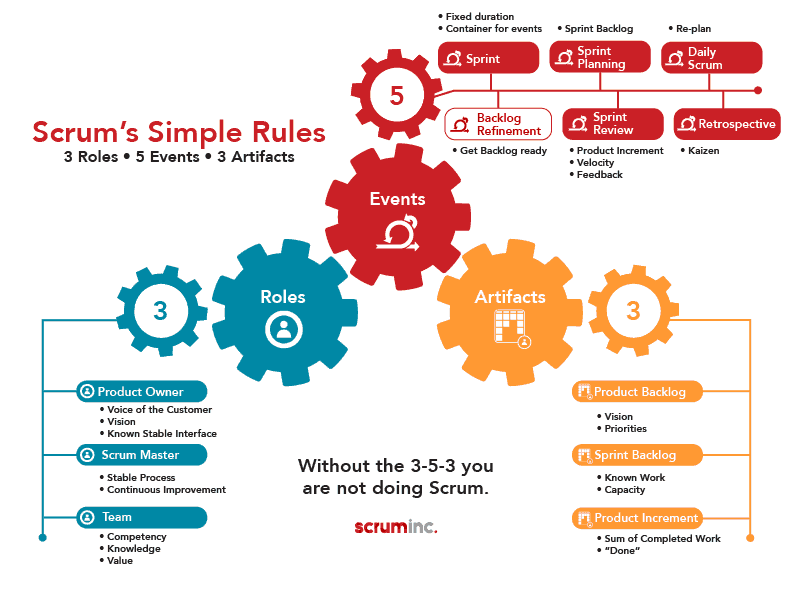
Whether at conferences or in articles, the term DevOps is currently the subject of lively discussions in the IT world. This interest is understandable, because numerous IT departments are looking for ways to free their companies from the existing mixture of delayed projects, questionable product quality and missed delivery dates.

However, despite all the enthusiasm, there is often a suspicion that not everyone has the same understanding of the term DevOps. This fear increases when CTOs and vendors claim to provide DevOps services or offer tools for them. Against this background, it makes sense to bring together and compare the different, and sometimes ambiguous, interpretations of DevOps.

What is DevOps – really?

By definition, DevOps is a set of software development practices that combine software development (Dev) and information-technology operations (Ops) to shorten the systems-development life cycle while delivering features, fixes, and updates frequently in close alignment with business objectives (https://en.wikipedia.org/wiki/DevOps). In practice, DevOps is a collaborative approach to organisational and process improvement in the areas of development and operations. With a background of finding new methods to increase agility, the term was used for the first time at a conference in Belgium in 2009. Since then, it has been one of the most discussed topics when it comes to the question of the best way of working. Many large companies are now pursuing DevOps strategies.

What DevOps isn’t? DevOps is not a methodology or a process, or a particular bunch of tools or technologies. In fact, DevOps can’t even be clearly assigned to development and operations. DevOps is also not a software-as-a-service application, even though many companies that successfully use DevOps come from this area.

Instead, DevOps is commonly understood as part of the corporate culture with certain principles that a company strives for and embraces in the long term. Supporters of this culture value cooperation, experimentation and a willingness to learn. All those involved in a DevOps culture focus on one goal throughout the entire software delivery lifecycle. Not just in development and operation but also the rapid implementation of stable, high-quality software, from inception to delivery to the customer or user.

Although not mandatory, the automation of software development, testing and deployment through Continuous Delivery (CD) is a recognised k ey factor for DevOps. Automation enables faster software implementation and ensures that solutions have the required quality, security and stability.

Defining DevOps

In simplified terms, DevOps focuses on bringing together all participants in the software development cycle at three levels: People, Processes and Tools.

DevOps can be defined and described in terms of very different models, all of which are correct in their own way and can lead to a deeper understanding and a seamless introduction. A good example can be found in ‘Three Ways of DevOps’ in Gene Kim’s book ‘The Phoenix Project’. The three ways describe intersections between systematic thinking, reinforcement of feedback loops, continued experimentation and learning at its core.

Another model is an acronym called C.A.L.M.S. According to DevOps pioneer John Willis, the five basic principles of C.A.L.M.S. are needed to establish a DevOps culture in the company according to the motto, “Keep C.A.L.M.S. and carry on”:

  • Culture describes a safe environment for innovation and productivity. To create this, the boundaries of the individual areas must be broken. Separated groups of developers and operators each pursuing their own goals will no longer exist.
  • Automation refers to the conviction that optimisation takes place through automation. Process automation creates consistency, saves time and avoids errors.
  • Lean means avoiding waste and still achieving the desired results. Process optimisation must be seen holistically, and transparency is required for this.
  • Measurement defines uniform evaluation criteria that must be created. With these, a continuous improvement of the processes is possible.
  • Sharing serves as the basis for joint communication. This includes the willingness to share knowledge and to learn from each other, as well as the proactive sharing of knowledge.

These five principles form the basis for more efficient cooperation and better quality product. DevOps itself is more than a tool and simple automation. All the above building blocks for DevOps are equally important for a successful DevOps implementation. but at the core of DevOps are the people and the way they collaborate with others.

Establish DevOps as culture

Developing towards DevOps means that a cultural change usually needs to take place. Teams in development and IT operations work together to deliver mutual value throughout the entire lifecycle of the product.

With Continuous Delivery as its key factor, DevOps creates previously unknown transparency. A build monitor can be used, for example; to show the current state of the software. This can be done very granularly, i.e. each individual step (build, unit test, integration test, acceptance test, metrics, deployment on target system, etc.) is directly visible on such a monitor at any time. Once DevOps is established, not only can the state of the software be visualised, but the state of the infrastructure is also transparent. Monitoring not only gives feedback to the Ops team on their computers but is also available to developers in the same way, making the entire team feel responsible for the software. Regardless of whether the server monitoring is reporting problems, or a unit test fails, or unexpected errors are logged in the application logs, the team immediately recognises that there is a problem with the application and takes care of it – in line with the principle of collective ownership.

It is important that the movement toward DevOps is supported at the management level because it requires the dismantling of functional silos, an initial investment in hardware and software for automation, the changing of work environments and the recognition that cultural change takes time and cannot simply be introduced into the company overnight. The way in which software is developed and operated is changing noticeably, but the advantages are obvious and are usually already demanded by management: Shorter time to market, stress-free regular releases, higher quality, transparency and high-performance teams – what more could you want?

Hartoyo Barlian – Man Behind Mitrais’ IT Support

In a successful company like Mitrais, there are a host of team members who contribute to that success. Many are obvious to staff and clients due to the high profile of their roles, but some of the most important are rarely seen or acknowledged.

As CIO, Hartoyo heads up the IT Support Team. The fact that they can be almost invisible to the organisation and clients on a day to day basis is a testament to how well they perform their roles – generally things simply work, and when they don’t, his calm influence is a real asset.

But how does such a quietly competent operator as Hartoyo come to be? Born in Bali, Hartoyo undertook his primary and secondary school on the island. On graduating high school, he was able to continue his education at the University of Arizona (yes, he was a Wildcat!) majoring in Management Information Systems. He became immersed in the innovative culture that existed at that time, working with some of the most renowned Unix Wizards (“real-life geeks” Hartoyo says).

Hartoyo became so involved that he took to collecting examples of differing platforms in his room. Having working Sun Solaris, Apple PowerPC, Dell Pentium Pro machines had an unexpected benefit. They generated so much heat that Hartoyo never needed to turn on the heating – he was always toasty warm in the chilly Arizona winter!

Like a lot of IT professionals, Hartoyo was initially attracted to IT via games. Starting with Nintendo/Sega consoles, he quickly became interested in the much richer variety of gaming titles available on the PC’s DOS platform. Wing Commander became his favourite pastime, and he was an avid player at that time.

Interestingly, now that he is a respected IT professional, his enthusiasm for gaming has not diminished, and it remains one of his favourite downtime activities. These days, though, his interest is piqued by considerably more sophisticated historical warfare simulations, and he has a strong passion for historical hoplology (the study of arms and armour). He finds that this compliments his gaming hobby nicely.

Within Mitrais, though, Hartoyo and his team are simply known as the “go to” guys on all matters relating to IT and Networks. He is equally at home managing the considerable internal demands of Mitrais staff (both reactive day to day problem solving and longer-term strategic planning), and the wildly varied requirements of Mitrais clients (for whom we regularly need to create and maintain a dazzling array of virtual environments that mirror their own). However, Hartoyo still retains the ability to focus on and manage vital organisational elements like disaster recovery and network security.

Perhaps he runs his team like one of the armies in his beloved battle simulations, and that is the secret behind the team’s consistent performance?

One of Hartoyo’s favourite quotes might give us a glimpse into his management style. As the 15th century Italian writer, Niccolò Machiavelli, said, “He who wishes to be obeyed must know how to command.” And if that sounds like a quote from the game Total War: Medieval, it works, so we can forgive that!

A Journey with Microservices – Part 1

The Background Story – Defining the Problem

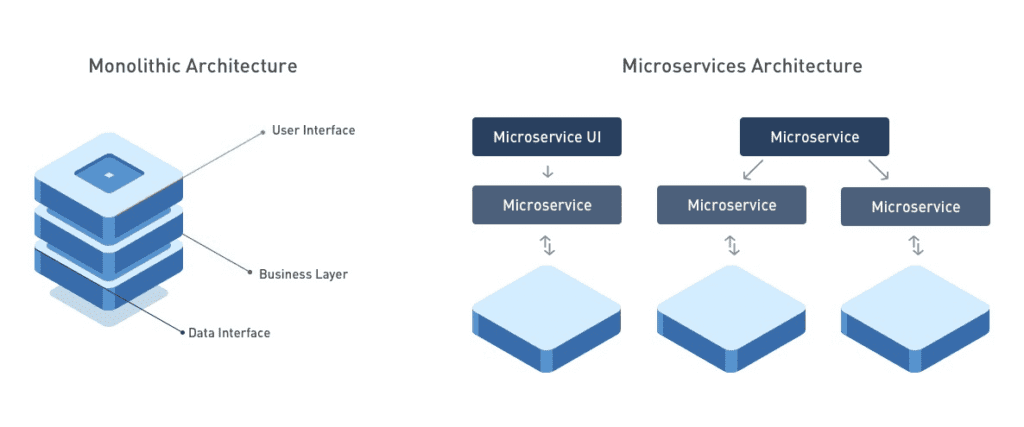
For the last several months I have been creating server-side apps using Spring Boot. These apps must support a variety of different clients including desktop browsers, mobile browsers and native mobile applications. The server-side apps all handle HTTP requests, processing them by executing business logic and providing JSON as responses. Because of my knowledge of developing server-side apps and the current project situation, I have so far created and deployed these apps as single monolithic applications.

While this has worked well so far, it is apparent that as the applications become more complex with enhanced features, testers are having increasing difficulties testing the front-end apps. Even worse, once a defect has been identified in particular feature, the entire application needs to be redeployed. This interrupts background tasks, and it is possible that fixes may even be ineffective. Because the front-end dev team cannot effectively test their apps using real APIs, results can be unpredictable.

In researching strategies to tackle this issue, I came across microservice architecture. Essentially, microservice architecture is a method of developing software applications as a suite of independently deployable, small, modular services. Each service runs on its own process and communicates through a well-defined mechanism to serve a business goal. Microservice architecture seemed to offer solutions to the issues I was facing, so I decide to migrate the apps step-by-step from monolithic to microservice.

Introducing Microservice Architecture

Microservices is an architectural style that structures an application as a collection of services that are:

  • Highly maintainable and testable
  • Loosely coupled
  • Independently deployable, and
  • Owned by a small team

In this context, loosely coupled means that each service can be usually be updated separately without affecting other services. On the rare occasions other services are impacted, impact to them is generally minimal.

Using Microservice architecture has a number of immediate benefits:

1. It makes continuous delivery and deployment of large and complex applications possible.

  • Easier to maintain because each service has a smaller business scope and technical complexity.
  • Enables more thorough testing because individual services are smaller.
  • Deploying services is easier, and services can be deployed independently.

2. Each service is relatively small:

  • They are easier for developers to understand.
  • Opening each microservice project in an IDE is faster.
  • Application start-up times are lower, speeding up deployments.

3. Improved fault isolation helps prevent the spreading of an issue from one service to another.

To better understand how a microservice works, let’s look at how we could create one.

Designing Microservices

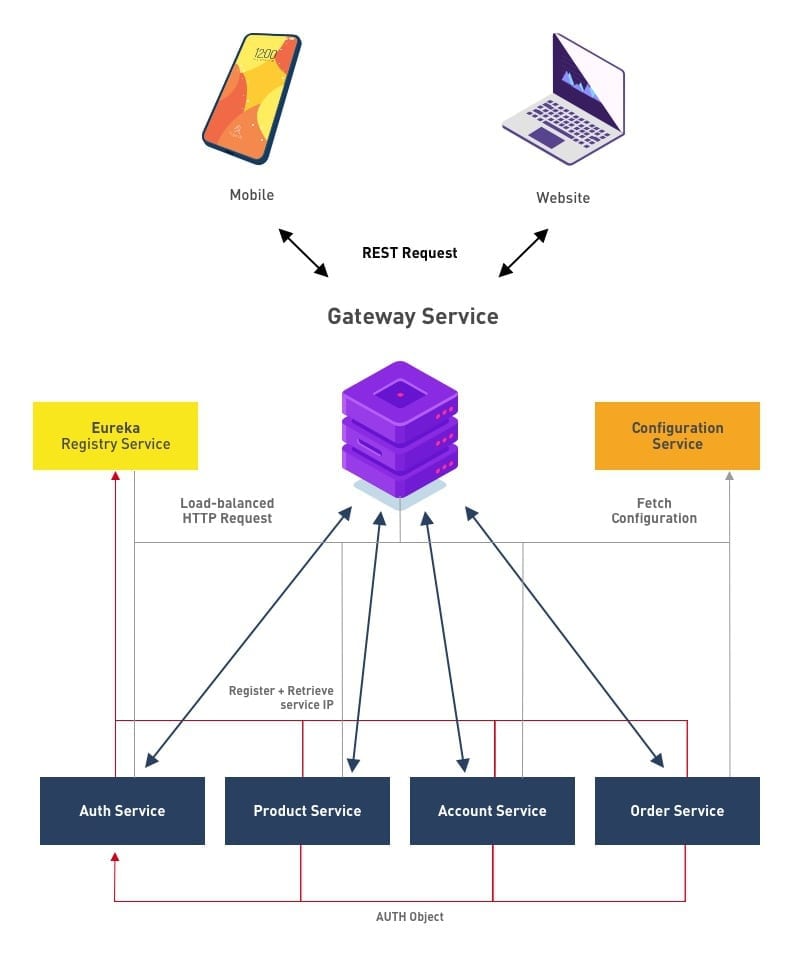
Before we start implementing our Microservice example, here is a high-level diagram of how it will look.

According to Microservices architecture, we will divide the application into separate services. Each service is scalable and independently deployable, and they have exact and well-defined scopes. From the above image we can separate the services into two categories – functional and non-functional.

The non-functional services will be:

1. The Configuration service:
A service dedicated to providing configuration data for all other services. We use this approach to reduce complexity when maintaining the configuration of many microservices in different environments.

2. The Registry service (Discovery service):
This service helps to discover the services we required. When a service needs access to another service, the registry server provides all the endpoint details of the requested service to establish the connection. All services need to register with the Registry Sever, or it won’t know about them. There are multiple popular implementations possible for the Discovery Server (e.g. Netflix Eureka, Consul, Zookeeper).

3. The Gateway service:
This service acts as the “front door” of the system. External users access core services through the API Gateway. The Gateway service then routes the requests to service endpoints by reading services that are registered in the Registry service.

The second category is functional services. Keep in mind that all of these services are dependent on non-functional services used by the client. The functional services will be:

1. The Authentication service:
This is responsible for handling the authentication processes of the system, auth-user retrieval, and auth-user store. It connects with the User, Role, and Permission database tables.

2. The Product service:
This is responsible for the products store and products listings (like stock handling processes).

3. The Account service:
This is responsible for handling user account and user personal identity.

4. The Order service:
This is responsible for handling orders for products placed by buyers. The seller can then process the orders.

Now that we have designed how the Microservices will work microservice, we’re ready to start building. In the next part, I will explain on how we implement the non-functional services using spring boot. Stay tuned!

Author:
I Kadek Dendy Senapartha – Analyst Programmer Mitrais

Selecting the Right Technical Candidate from Mitrais

Once you have decided to develop a technical team or add more team members to your existing team using the skilled people from Mitrais, you will need to select the right candidate proposed to you by the Mitrais Account Manager.

There are many different styles and approaches to interviewing and selecting technical candidates. Everyone will have their own preferences on how best to conduct the selection. Therefore, I will not be suggesting which approach is best, but instead trying to shed some light on this process based on my experience.

Interview questions and testing for selecting technical candidates usually falls into a couple of categories.

1. Deriving questions based on the candidate’s CV

This approach is one of the most common ones. The interview can be structured by going through the candidate’s CV and asking them to explain in more detail each experience that interests the interviewer. Using this approach, dive deep into the candidate’s their experience and skill set. This can be combined with other types of interview question.

Another popular questioning technique is to ask specific questions related to their experience, what the candidates did when certain obstacles occurred, and what they would do differently now to see if they have learned from their mistakes or experience.

By asking and going through the candidate’s experience based on their CV, the interviewer can get a fairly complete picture of the depth and coverage of the candidate’s experience and skill set. This approach also allows you to assess the candidate’s communication skills.

2. Common interview questions (often asked by the HR staff)

There is a check-list of common questions usually asked by an interviewer from a HR background. They include:

  • Tell me about yourself
  • What do you know about this company?
  • What are your strengths?
  • What’s the most enjoyable part about your job and why?
  • How do you handle criticism/pressure?
  • What do you like the least about your current job?
  • Why did you choose this career path?

If an interviewer with an HR background is not on your interviewing team, you should try to ensure that these types of open questions are included at some point.

These open questions allow you to get into more detail to assess what the candidate has done or would have done in certain situations. An experienced interviewer is able to gain more insight about the candidate using this interview technique.

3. Test the brightest minds using generic puzzle questions.

Some interviewers love this type of question to see if how a candidate will react. By including puzzle or problem-solving questions, you can see how a candidate approach different challenges from a simple question (such as why the manholes are round) to more complex questions.

The candidate might try to prepare themselves by reading the typical puzzle questions used in interviews by searching in the internet. So generic questions don’t guarantee that those with the best scores are the brightest – perhaps they are just the most prepared candidates.

4. Assess the candidate by performing a sample real-world task

When selecting a technical candidate, there is no better way to assess their capability than asking them to perform some real sample technical task and assess their performance based on their performance.

For programmers, asking them to solve real code challenges requires them to use real coding skills and show their algorithmic, programming and problem-solving skills.

For testers, asking them to design test cases for a certain type of simple application serves a similar purpose.

The drawback of this technique is that it can make the interview process time-consuming. There are some tools (such as HackerRank) that can help in testing a technical candidate using this approach.

5. Assess the candidate by asking questions based on industry processes and best-practice.

Some questions might include:

  • Do you do any unit testing? If so, please explain when and how you perform unit tests.
  • Do you perform code reviews? How are they performed?
  • Have you prepared test cases? Who reviewed them? How were the tests executed? How were the test results reported?
  • Have you ever tried to refactor your code to be more efficient? If so, please explain your experience in doing so.

This interview technique can be quite effective to be able to assess the coverage of the candidates experience and skills in regard to the engineering best practices in short period of time. However, we still need to be careful. A candidate may claim that they always perform unit testing, but that doesn’t necessarily mean that he/she is expert at designing and performing unit tests.

6. Assess the candidate by assessing on their knowledge of the fundamentals of their disciplines.

  • For a Java programmer, perhaps ask the difference between double equals (“==”) and the “equals()” method in Java. We could also ask about the differences between the Java SDK and Java Runtime Environment (JRE) , or the new features of different JDK versions (e.g. Java 8 or Java 11).
  • For a .NET programmer, we might ask the candidate to describe the architecture of the .NET Framework, and to name the common .NET Assembly.
  • For testers, we could ask them to discuss the strengths and weaknesses of domain testing.

This interview style is quite effective and easy to use in assessing the candidate’s technical knowledge, but if the candidate uses different terminology for the same items that we refer to in our technical question, we may need to elaborate more to the candidate on what we mean by our question.

7. Elimination based on role constraint.

We can quickly assess the candidate suitability for the role by directly asking or interviewing the candidate based on constraint for the current role opening. For example, if the candidate must have at least 5 years of experience as a front-end programmer, anyone with less experience than that can be quickly removed from the list.

Another good practice is to have different people in different roles that the candidate may work with interview the candidates (in different interview sessions). This often gives you a more complete picture of the candidate, and can be a good approach since different people naturally see and focus on different aspects when interviewing. It could be a more time-consuming process, though, and may not be necessary if the assignment is a short term assignment.

What are your favourite interview questions? I usually try to combine as many of these types of question as time allows. But often time is not at our side when we are on time constraint. By knowing the characteristics of each technique, hopefully we can make the right decision to choose and combine the right ones in selecting the right technical candidate from Mitrais.
[vc_raw_js]JTNDc2NyaXB0JTNFJTBBZG9jdW1lbnQuYWRkRXZlbnRMaXN0ZW5lciUyOCUyN0RPTUNvbnRlbnRMb2FkZWQlMjclMkMlMjBmdW5jdGlvbiUyMCUyOCUyOSUyMCU3QiUwQSUyMCUyMGNvbnN0JTIwZ3JpZExpc3QlMjAlM0QlMjBkb2N1bWVudC5xdWVyeVNlbGVjdG9yJTI4JTI3LmZhcS1hY2NvcmRpb24tZ3JpZCUyMC53LWdyaWQtbGlzdCUyNyUyOSUzQiUwQSUwQSUyMCUyMGlmJTIwJTI4Z3JpZExpc3QlMjklMjAlN0IlMEElMjAlMjAlMjAlMjBncmlkTGlzdC5hZGRFdmVudExpc3RlbmVyJTI4JTI3Y2xpY2slMjclMkMlMjBmdW5jdGlvbiUyMCUyOGV2ZW50JTI5JTIwJTdCJTBBJTIwJTIwJTIwJTIwJTIwJTIwY29uc3QlMjBjbGlja2VkVGl0bGUlMjAlM0QlMjBldmVudC50YXJnZXQuY2xvc2VzdCUyOCUyNy5mYXEtdGl0bGUlMjclMjklM0IlMEElMjAlMjAlMjAlMjAlMjAlMjBpZiUyMCUyOCUyMWNsaWNrZWRUaXRsZSUyOSUyMHJldHVybiUzQiUwQSUwQSUyMCUyMCUyMCUyMCUyMCUyMGNvbnN0JTIwY29udGFpbmVyJTIwJTNEJTIwY2xpY2tlZFRpdGxlLmNsb3Nlc3QlMjglMjcuZmFxLWl0ZW0tY29udGFpbmVyJTI3JTI5JTNCJTBBJTIwJTIwJTIwJTIwJTIwJTIwY29uc3QlMjBjb250ZW50JTIwJTNEJTIwY29udGFpbmVyLnF1ZXJ5U2VsZWN0b3IlMjglMjcuZmFxLWxpc3QtY29udGVudCUyNyUyOSUzQiUwQSUyMCUyMCUyMCUyMCUyMCUyMGNvbnN0JTIwaXNBY3RpdmUlMjAlM0QlMjBjb250YWluZXIuY2xhc3NMaXN0LmNvbnRhaW5zJTI4JTI3ZmFxLWFjdGl2ZSUyNyUyOSUzQiUwQSUwQSUyMCUyMCUyMCUyMCUyMCUyMGNvbnN0JTIwYWxsQ29udGFpbmVycyUyMCUzRCUyMGdyaWRMaXN0LnF1ZXJ5U2VsZWN0b3JBbGwlMjglMjcuZmFxLWl0ZW0tY29udGFpbmVyLmZhcS1hY3RpdmUlMjclMjklM0IlMEElMjAlMjAlMjAlMjAlMjAlMjBhbGxDb250YWluZXJzLmZvckVhY2glMjhjJTIwJTNEJTNFJTIwJTdCJTBBJTIwJTIwJTIwJTIwJTIwJTIwJTIwJTIwY29uc3QlMjBpbm5lckNvbnRlbnQlMjAlM0QlMjBjLnF1ZXJ5U2VsZWN0b3IlMjglMjcuZmFxLWxpc3QtY29udGVudCUyNyUyOSUzQiUwQSUyMCUyMCUyMCUyMCUyMCUyMCUyMCUyMGlubmVyQ29udGVudC5zdHlsZS5oZWlnaHQlMjAlM0QlMjAlMjcwcHglMjclM0IlMEElMjAlMjAlMjAlMjAlMjAlMjAlMjAlMjBjLmNsYXNzTGlzdC5yZW1vdmUlMjglMjdmYXEtYWN0aXZlJTI3JTI5JTNCJTBBJTIwJTIwJTIwJTIwJTIwJTIwJTdEJTI5JTNCJTBBJTBBJTIwJTIwJTIwJTIwJTIwJTIwaWYlMjAlMjglMjFpc0FjdGl2ZSUyOSUyMCU3QiUwQSUyMCUyMCUyMCUyMCUyMCUyMCUyMCUyMGNvbnRhaW5lci5jbGFzc0xpc3QuYWRkJTI4JTI3ZmFxLWFjdGl2ZSUyNyUyOSUzQiUwQSUyMCUyMCUyMCUyMCUyMCUyMCUyMCUyMGNvbnRlbnQuc3R5bGUuaGVpZ2h0JTIwJTNEJTIwY29udGVudC5zY3JvbGxIZWlnaHQlMjAlMkIlMjAlMjdweCUyNyUzQiUwQSUyMCUyMCUyMCUyMCUyMCUyMCU3RCUwQSUyMCUyMCUyMCUyMCU3RCUyOSUzQiUwQSUyMCUyMCU3RCUwQSU3RCUyOSUzQiUwQSUzQyUyRnNjcmlwdCUzRQ==[/vc_raw_js]